Acting Attorney General Todd Blanche Receives Senate Confirmation
The U.S. Senate approved Blanche to lead the Justice Department before leaving for its August recess.
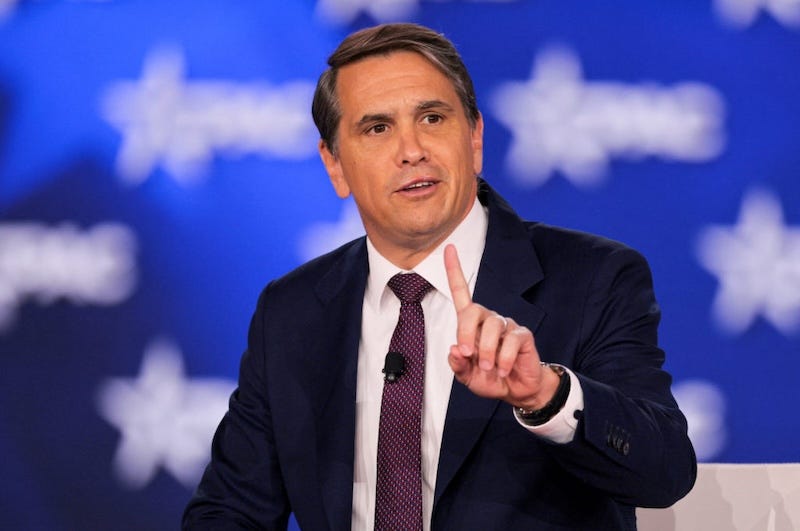
In the early hours Saturday, the U.S. Senate held a recorded vote to confirm one individual nominated by President Donald Trump to lead a Cabinet agency. This was one of the final votes taken by the Senate before the start of its August recess. The congressional chamber will return on September 14, 2026.
In a 50-49 vote, Todd Blanche was confirmed as U.S. Attorney General. The position has been held by an acting official since April 2026, when Pam Bondi resigned after serving since February 2025.
50 Republicans approved Blanche’s nomination. Republicans Susan Collins of Maine and Lisa Murkowski of Alaska joined all 45 Democrats and two Independents in opposition. Senator Mitch McConnell (R-KY) did not vote.
Blanche was nominated for this promotion within the Justice Department by Trump in June 2026. Since March 2025, he has served as the Deputy Attorney General. He has been the Acting Attorney General since Bondi’s resignation in April 2026.
Blanche started his legal career as an associate at Davis Polk & Wardwell LLP from 2005 to 2006. He was then an Assistant U.S. Attorney in the U.S. Attorney’s Office for the Southern District of New York from October 2006 to November 2014. His tenure as a prosecutor culminated as Co-Chief of the Violent Crime Unit from August 2011 to August 2013 and Co-Chief of the White Plains Division from August 2013 to November 2014.
Blanche later returned to private practice as counsel at Wilmer Cutler Pickering Hale & Dorr LLP from 2014 to 2017 and as partner at Cadwalader, Wickersham & Taft LLP from 2017 to 2023. In April 2023, Blanche became the personal criminal defense attorney to President Trump. He also handled criminal defense cases for former New York City mayor Rudy Giuliani and his associate Igor Fruman as well as former Trump 2016 campaign chairman Paul Manafort.
Blanche’s tenure at the Justice Department during Trump’s second term as President has been highly controversial. In May 2026, Judge Waverly Crenshaw in Tennessee dismissed the criminal case against migrant Kilmar Abrego Garcia as a vindictive and selective prosecution due to Blanche’s involvement in bringing the case. In July 2026, Judge Kathleen Williams in Florida wrote that the weaponization settlement fund borne out of Trump v. Internal Revenue Service constituted a “fraud on the court” and was “the product of collusion.” She ordered that a copy of her opinion be sent to the State Bar of New York for potential action against Blanche.
During a closed-door appearance before the House Oversight Committee, former Attorney General Pam Bondi blamed Blanche for the department’s mishandling of the Epstein files in accordance with the Epstein Transparency Act. Congress ordered the public release of the files associated with the criminal cases against child sex traffickers Jeffrey Epstein and Ghislaine Maxwell. However, the department has withheld millions of documents, illegally redacted the names of potential co-conspirators and other associates, and released personally identifiable information of victims and survivors. Judge Emmet Sullivan in Washington, D.C. has ordered Blanche to appear in person on August 13 to explain why he hasn’t been in compliance with his judicial orders.
During his confirmation hearing, Blanche was pressed by Senators on his role in bringing selective prosecutions against the President’s perceived enemies, lax oversight of Kash Patel’s tenure as FBI director, and his role in the creation of the $1.776 billion anti-weaponization fund and IRS immunity agreement with the Trump family. Blanche took no action to meet with multiple Epstein survivors until it threatened to derail his nomination. Moreover, he refused to put in writing that the weaponization fund was dead. Senators John Cornyn of Texas and Thom Tillis of North Carolina, both Republicans, pressed for a deal that formalized his testimony before the committee. The final resolution offers no certainties though. Instead, Republican Senators folded and let Trump keep his personal lawyer in charge of the U.S. Department of Justice.